

The safest sunless tanning alternatives are DHA-based topical products (lotions, mousses, tanning waters and drops), professional spray tans, temporary bronzers and make-up, and evidence-backed carotenoid supplements such as beta-carotene. Every one of these avoids UV exposure entirely, which matters because, as the Institute of Dermatologists confirms, a UV tan is not a sign of health but a response to DNA damage. The Skin Cancer Foundation puts it plainly: there is no such thing as a healthy UV tan.
For everyday natural colour, a skincare-led gradual topical product is the most practical choice. Helloafter5’s gradual tanning water is a good example: oil-free, hydrating, and designed to suit even acne-prone skin. For a special event, a professional spray tan gives more immediate, all-over coverage, and you can maintain the result at home with a gradual topical between appointments. One rule applies to every method: sunscreen is still non-negotiable outdoors, because a self-tan offers virtually no UV protection.
Table of Contents
- What are the main sunless tanning alternatives?
- Which method suits your skin type and occasion?
- How do you choose the right UV-free method for you?
- How to apply self-tan at home for an even, natural result
- What do dermatologists say about sunless tanning safety?
- Why modern sunless products perform better than older formulas
- Key takeaways
- The case for going gradual
- Helloafter5: a skin-friendly at-home option worth trying
- Useful sources for UK readers
What are the main sunless tanning alternatives?
Sunless tanning, sometimes called self-tanning or UV-free tanning, covers any method that creates a tan-like colour without UV light. The main options available in the UK are:
- DHA-based topical products. Dihydroxyacetone (DHA) is the active ingredient in most self-tanners. It reacts with amino acids in the outermost layer of skin to form brown-toned compounds called melanoidins. The colour sits entirely on the surface and fades as those skin cells shed naturally. Products come as lotions, mousses, tanning waters, drops, and gradual formulas.
- Professional spray tans. A technician or automated booth applies a fine DHA mist over the whole body. The same DHA reaction occurs, but coverage tends to be more even than DIY application.
- Temporary bronzers and make-up. Tinted products that sit on the skin and wash off with water. No chemical reaction, no development time. Useful for an instant finish before an event.
- Gradual tinted moisturisers. Low-DHA formulas blended with moisturiser for a subtle, buildable colour. Beginner-friendly and easy to maintain daily.
- Oral carotenoids. Beta-carotene and lycopene supplements can produce a subtle warm tone in the skin over time. The effect is mild and does not replace topical DHA for visible results.
What to avoid. Tanning accelerators and many oral tanning pills are unproven and carry real risks. Kaiser Permanente warns that ingredients such as canthaxanthin have been linked to vision and liver problems. Melanotan peptides (sometimes sold as nasal sprays or injections) are not licensed for use in the UK and carry serious safety risks. Steer clear of any product making claims about stimulating melanin production from within.
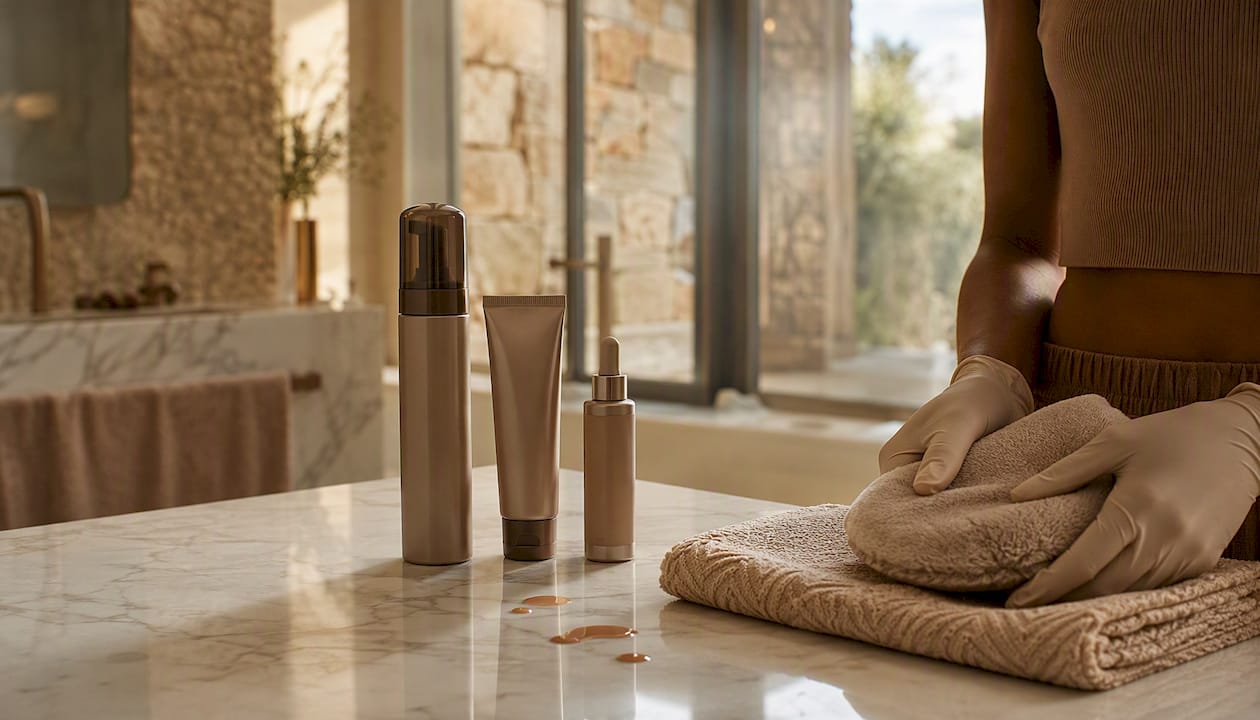
Helloafter5 sits in the DHA topical category with its gradual tanning water, oil-free body shimmer, and face highlighter. The shimmer is a bronzer-style product that gives instant radiance without DHA development time, making it useful alongside the tanning water for events.
Which method suits your skin type and occasion?
| Method | How it works | Look and finish | How long it lasts | Best for | Safety notes | Typical UK cost | Skill needed |
|---|---|---|---|---|---|---|---|
| DHA topical (lotion/mousse) | DHA reacts with outer skin cells | Natural; streak risk if prep is poor | 5–7 days, fades gradually | Daily use, all skin tones | Patch test advised; allergy rare but possible | £2–£6 per application | Moderate; mitt helps |
| Gradual tanning water | Low DHA, builds slowly | Very natural; low streak risk | Maintained with daily use | Beginners, sensitive/acne-prone skin | Low irritation risk; oil-free formulas suit acne skin | Similar to topical | Low; beginner-friendly |
| Professional spray tan | DHA mist applied by technician or booth | Even, all-over; minimal streak risk | 7–10 days | Events, first-timers wanting even coverage | Inhalation risk if ventilation is poor; protect eyes, nose, mouth | £25 per session | None (salon does it) |
| Temporary bronzer/make-up | Pigment sits on skin surface | Instant; can transfer onto clothes | Washes off | Same-day events, quick finish | Very low; wash-off only | £5 | Low |
| Oral carotenoids | Pigment deposited in skin tissue | Subtle warm tone; not a full tan | Ongoing with supplementation | Complement to topical methods | Generally safe; high doses can cause orange-yellow skin tone | Varies | None |
Pros and cons at a glance:
- DHA topicals: affordable, controllable, wide product choice. Downside: prep time, risk of streaks on dry skin, and DHA can increase free radicals if it penetrates beyond the outermost skin layer.
- Spray tans: even coverage, fast results, no DIY skill required. Downside: salon cost, inhalation risk, and you cannot control the formula used.
- Bronzers: zero commitment, instant. Downside: transfers easily, no lasting colour.
- Carotenoids: safe, subtle. Downside: slow, mild effect only, and high doses cause an unnatural orange-yellow tone rather than a tan.
Red flags to watch for: inadequate ventilation in spray booths, no patch-test guidance on product labels, unregulated pills or peptides claiming to “activate melanin,” and any product not listing DHA as the active ingredient when it claims to produce a lasting colour.
How do you choose the right UV-free method for you?
Three questions narrow it down quickly.
- Do you have asthma, a respiratory condition, or sensitivity to aerosols? If yes, avoid spray booths and opt for a topical product at home.
- Are you tanning for a specific event or for everyday colour? Events call for a professional spray tan or a same-day bronzer; daily colour is easier and cheaper with a gradual topical.
- Do you have acne-prone or sensitive skin? Choose an oil-free, non-comedogenic formula. Helloafter5’s gradual tanning water is specifically formulated for this.
A quick decision checklist:
- Sensitive or acne-prone skin → oil-free gradual tanning water or drops
- Respiratory concerns → topical products only; no spray booths
- Event in 24–48 hours → professional spray tan or temporary bronzer
- Budget under £10 → at-home topical or gradual moisturiser
- Want gradual, low-maintenance colour → daily gradual tanning water
- Prefer instant results → bronzer for same-day, spray tan for a week-long result
Questions to ask before you buy or book:
- Does the product list DHA as the active ingredient and state its concentration?
- Is the product cruelty-free and vegan if that matters to you?
- Does the salon offer nose plugs, eye protection, and a well-ventilated booth?
- Is there a patch-test recommendation on the label?
In the UK, you can check cosmetic product safety claims via the Office for Product Safety and Standards and verify salon hygiene standards through your local authority’s environmental health team.
How to apply self-tan at home for an even, natural result
An even, natural-looking tan comes down to prep and fading management, not just the product you choose. Get those two right and the application itself is straightforward.
Step-by-step routine:
- Patch test first. Apply a small amount to your inner arm 24 hours before full application. If you notice redness, itching, or swelling, do not proceed.
- Exfoliate the day before. Use a gentle body scrub or exfoliating mitt to remove dead skin cells. Pay attention to knees, elbows, and ankles, where skin is thicker and tends to absorb more product.
- Shave or wax at least 24 hours before. Applying self-tan immediately after shaving can cause irritation and uneven colour in follicles.
- Moisturise dry areas only. Apply a light, oil-free moisturiser to elbows, knees, ankles, and wrists just before tanning. Avoid heavy oils, which create a barrier and cause patchiness.
- Apply with a tanning mitt. Work in circular motions from the ankles upward. Use leftover product on the mitt for knees and elbows rather than applying directly.
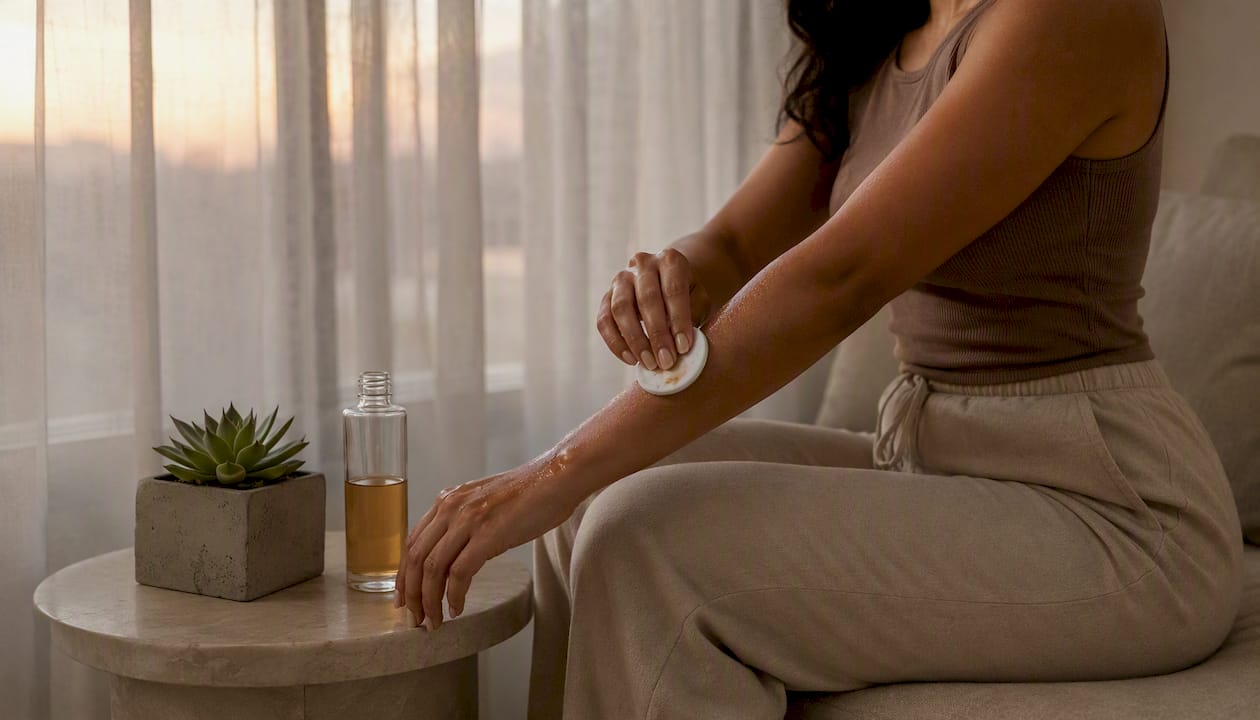
- For the face, use a face-specific formula or drops. Helloafter5’s face highlighter is designed for this purpose. Blend carefully at the hairline, eyebrows, and jaw.
- Allow to develop. Most DHA products need 4–8 hours to develop fully. Wear loose, dark clothing and avoid sweating or getting wet during this time.
- Rinse and moisturise. After development, rinse with water (no soap) and apply an oil-free moisturiser daily to extend the life of your tan.
Pro Tip: Apply a thin layer of barrier cream (such as a plain, fragrance-free lip balm) around your nails and between your toes before tanning. This prevents product pooling in creases and staining the skin around your nails.
Troubleshooting common problems:
- Streaks: buff gently with a damp exfoliating mitt; do not scrub hard or you will create a patchy result.
- Orange tones: often caused by too much product or a formula without colour-correcting actives. Switch to a gradual formula and build slowly. A guide on avoiding orange streaks can help you match shade to skin tone.
- Patchy fade: keep skin hydrated daily and exfoliate gently every 3–4 days to encourage even shedding.
- Dark hands or feet: use the mitt residue only on these areas, never apply product directly.
What do dermatologists say about sunless tanning safety?
The clinical position is clear: UV tanning causes DNA damage, and sunless alternatives avoid that risk entirely. The Institute of Dermatologists frames a tan as an injury response, which is why dermatologists consistently recommend UV-free methods. The Skin Cancer Foundation reinforces this, positioning self-tanners and spray tans as the responsible choice.
That said, sunless options have their own safety considerations:
- Sunscreen is still required. A self-tan colour provides roughly SPF 2–3 at best and offers no real UV protection outdoors.
- DHA is approved for external topical use in the UK and EU. The concern arises if it penetrates beyond the outermost skin layer, where Columbia Skin Clinic notes it may increase free radical activity. Using well-formulated products and not over-applying reduces this risk.
- Spray tan inhalation risk is real. Kaiser Permanente advises protecting your eyes, nose, and mouth during application and choosing salons with proper ventilation. If you have asthma, speak to your GP before using a spray booth.
- Patch test before every new product. Allergic reactions to DHA are uncommon but do occur. Signs include redness, itching, or hives within 24 hours.
- Melanotan peptides are not licensed in the UK and carry serious risks including uncontrolled skin darkening, nausea, and potential links to melanoma development. Avoid them entirely.
Who should consult a dermatologist or GP first: people with eczema, psoriasis, severe acne, asthma, or pregnancy should seek personalised advice before using any new tanning product or visiting a spray booth.
| Safety factor | Topical DHA | Spray tan | Bronzer | Oral carotenoids |
|---|---|---|---|---|
| UV exposure | None | None | None | None |
| Inhalation risk | None | Yes (if poorly ventilated) | Low (aerosol sprays) | None |
| Allergy potential | Low to moderate | Low to moderate | Low | Low |
| Regulatory status (UK) | Approved for topical use | Approved | Approved | Food supplement; not regulated as medicine |
| Avoid if | Severe DHA allergy | Asthma, respiratory issues | N/A | Taking high doses long-term |
This article provides general information only and is not a substitute for professional medical advice. Consult a UK GP or dermatologist for guidance specific to your health and skin.
Why modern sunless products perform better than older formulas
The self-tanning market has shifted noticeably toward skincare-first formulations. Newer products combine DHA with humectants such as hyaluronic acid and aloe vera, antioxidants, and colour-correcting pigments that reduce the orange undertone older formulas were known for. Columbia Skin Clinic notes this trend alongside a projected market growth of around 45% by 2030, reflecting growing consumer demand for products that tan and care for skin simultaneously.
What this means practically:
- Formulas with hyaluronic acid keep skin plumper, which helps colour fade more evenly rather than in patches.
- Antioxidant support (vitamin E, green tea extract) may help offset the free radical activity associated with DHA.
- Oil-free formulations suit acne-prone skin by avoiding pore-clogging ingredients.
- Gradual tanning waters build colour slowly, making it easier to control depth and avoid the “overdone” look.
The evidence on oral carotenoids is more limited. Beta-carotene and lycopene do deposit a warm pigment in skin tissue over time, but the effect is subtle and inconsistent. They work best as a complement to topical methods rather than a standalone approach.
Pro Tip: When reading a product label, look for hyaluronic acid or aloe vera listed in the first half of the ingredients. Their position indicates meaningful concentration, not just a marketing claim.
The practical recommendation: choose a formula that lists a humectant and an antioxidant alongside DHA. A gradual tanning water built on this principle gives you colour and skin conditioning in one step.
Key takeaways
Sunless tanning alternatives are the safest route to a natural-looking colour because they avoid UV-induced DNA damage entirely, provided you still apply sunscreen for outdoor protection.
| Point | Details |
|---|---|
| UV tanning causes DNA damage | Dermatologists class a UV tan as an injury response; sunless methods are the recommended alternative. |
| Sunscreen is still required | A self-tan colour provides roughly SPF 2–3 and offers no real UV protection outdoors. |
| Match method to occasion | Use a gradual topical for daily colour and a professional spray tan for events; a hybrid approach works well for most people. |
| Prep and fading determine quality | Exfoliation before and hydration after application produce a more even, longer-lasting result than the product alone. |
| Helloafter5 gradual tanning water | An oil-free, hydrating at-home option designed for acne-prone and sensitive skin, with low streak risk and daily use in mind. |
The case for going gradual
Most people treat sunless tanning as a binary: either a full spray tan before an event or nothing at all. That framing misses the most practical option entirely.
A daily gradual topical is not a compromise. It is a genuinely different approach, one that builds colour slowly enough to stay natural-looking, conditions skin as it goes, and removes the pressure of getting a single application perfect. The streak-or-nothing anxiety that puts many people off self-tanning disappears when you are adding a small amount of colour each day rather than committing to a full development cycle.
The hybrid model makes the most sense for most people: a professional spray tan for a holiday, a wedding, or any occasion where you want immediate, all-over coverage, and a hydrating gradual product for the weeks in between. That way, you are never starting from scratch, and the spray tan result fades more evenly because your skin is already conditioned.
What I would push back on is the idea that a spray tan is always the “better” result. In a well-lit room, a well-maintained gradual tan often looks more convincing than a spray tan at day five or six, when the latter starts to fade unevenly. The finish of a gradual product, applied consistently on hydrated skin, can be genuinely hard to distinguish from a natural tan.
Helloafter5: a skin-friendly at-home option worth trying
If you want a daily UV-free glow without the salon booking or the streak anxiety, Helloafter5 has built its range specifically around that need. The gradual tanning water is oil-free, formulated with hyaluronic acid and aloe vera, and designed to build a natural colour gradually without clogging pores or leaving a greasy residue. It works particularly well for acne-prone and sensitive skin, where heavier mousse formulas can cause problems.
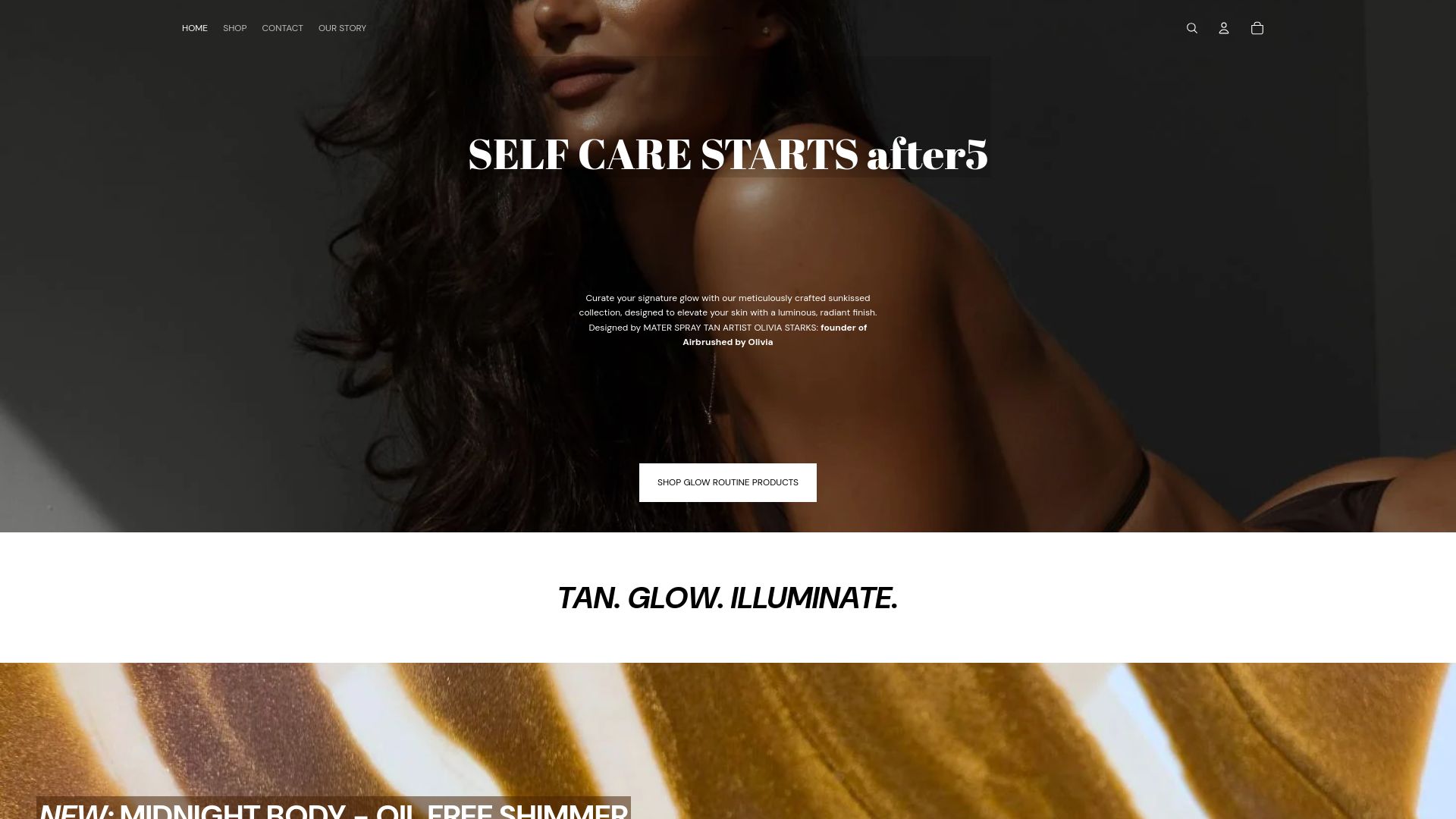
For an instant finish on top of your gradual tan, the Midnight Body oil-free shimmer adds a radiant bronze without DHA development time. It is a good choice for evenings or events when you want a little extra glow. The face highlighter roller works the same way for the face and décolletage.
If you want to try before committing to a full size, the 15ml travel size is a low-cost way to test how the formula works with your skin. For regular use, the 100ml value size offers better value per application. Browse the full range at helloafter5.com and find the size and format that fits your routine.
Useful sources for UK readers
Trustworthy information on sunless tanning is scattered across dermatology sites, health organisations, and beauty clinics. These are the most reliable starting points:
- Skin Cancer Foundation — the leading authority on UV risk and sunless alternatives; their guidance on spray tans and self-tanners is practical and evidence-based.
- Institute of Dermatologists — clear clinical explanation of why UV tanning is an injury response and why dermatologists recommend sunless methods.
- Kaiser Permanente — thorough safety summary covering DHA, spray tan inhalation risk, and the dangers of tanning pills and accelerators.
- Columbia Skin Clinic — useful for understanding DHA mechanism, free radical concerns, and market trends in modern formulations.
- Mayo Clinic — reliable general health guidance on sunless tanning safety, patch testing, and who should seek medical advice before use.
- Steadman Aesthetics — practical myth-busting on self-tan versus sunbeds, including the SPF misconception.
For personalised advice on skin conditions, allergies, or product suitability, consult a UK GP or a registered dermatologist. Always check product labels against the UK cosmetic regulations database if you have specific ingredient concerns.
Recommended
- Oil-Free Body Shimmer: Why It’s the Secret to a Radiant Body Glow and – after5: Sunless Tanning Water + Self-Care Products
- Tanning Water| Oil Free Body Shimmer| Gradual Tanning| after5 – after5: Sunless Tanning Water + Self-Care Products
- Gradual Tanning Water: Why It’s the Ultimate Glow Hack for Your Skin – after5: Sunless Tanning Water + Self-Care Products
- How to Get a Natural-Looking Tan That Actually Matches Your Skin Tone – after5: Sunless Tanning Water + Self-Care Products